Method in practice:
I map risk first, then place lightweight approval gates only where downside is meaningful. The objective is not permanent oversight, but controlled trust-building through observable results.
I stopped treating AI adoption like a binary choice and started designing explicit review points where people step in. That shift made execution safer, faster, and more dependable in real operations.
I map risk first, then place lightweight approval gates only where downside is meaningful. The objective is not permanent oversight, but controlled trust-building through observable results.
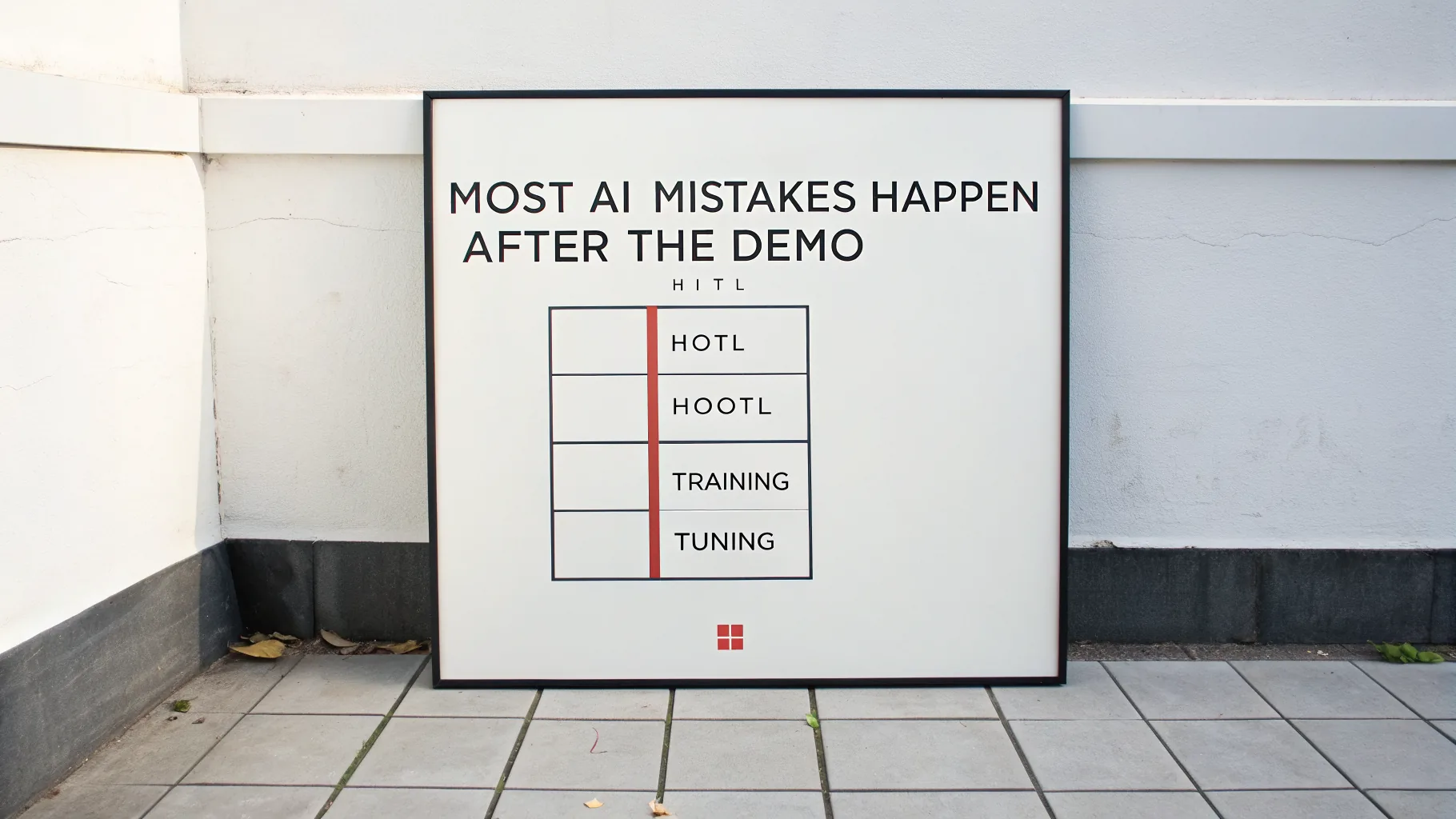
I used to frame adoption with one question: can AI run this end to end? It sounded efficient, but it produced fragile workflows. One unchecked output could rewrite a customer record, send the wrong message, or authorize a decision nobody intended. The more useful question became where supervision belongs. That single reframing moved us from demo excitement to repeatable operating discipline.
Most real work is not binary. Some tasks are repetitive and low-risk, while others are contextual and expensive to get wrong. My definition of human-in-the-loop is practical: insert review where volatility is highest, then make intervention fast enough that people will actually use it. This is targeted judgment under pressure, not process theater.
When I stopped chasing perfect autonomy, delivery improved. We delegated in stages, documented intervention points, and wrote rollback steps before incidents. The result was better speed with fewer surprises.
547 words
Compact strategic playbook focused on operational execution, not theory.
1 approval gate
Install it at the single decision with the highest downside risk.
Weekly
Cluster corrections by pattern in a shared log to find systemic issues early.
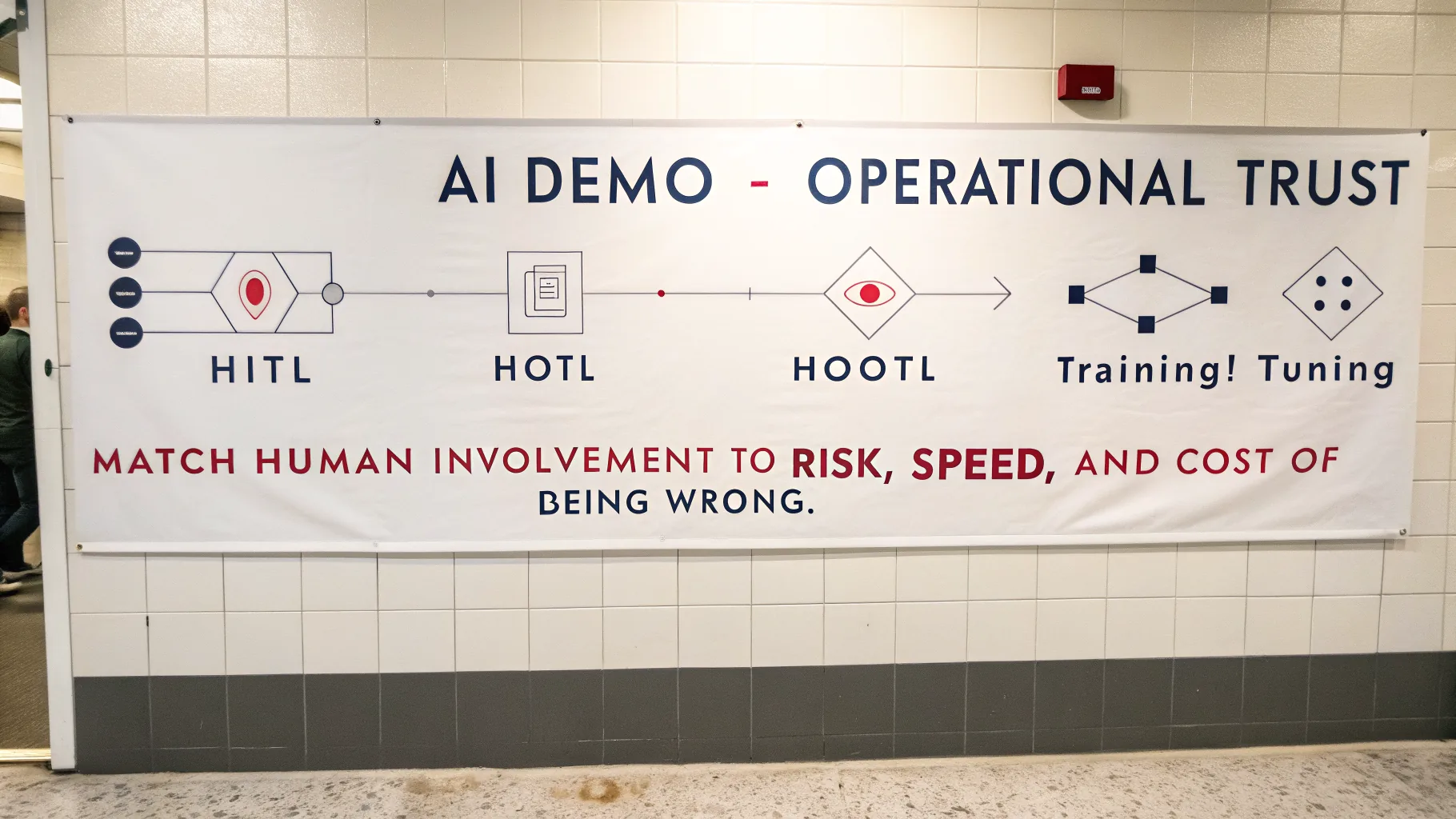
Oversight starts before runtime. During training, people create labels that become ground truth, and label quality sets the ceiling for how a model behaves under stress. If labels drift or carry mixed intent, outputs can still look polished while decisions degrade quietly. That mismatch—good metrics, worsening outcomes—is the failure pattern I now watch first.
During tuning, teams define what “good” means in live work: safe, useful, and aligned with voice. I explain RLHF to non-technical colleagues as repeated coaching at scale—reward strong responses, correct weak ones, and reinforce what should repeat. In customer-facing systems, technical correctness alone is insufficient; framing and tone influence trust, escalations, and downstream results.
At inference, policy becomes operations through thresholds, approval gates, and escalation queues. This is where capability meets consequence, so controls must remain explicit, visible, and auditable.
Pick one process and rewrite it in plain language so everyone can see where judgment actually happens. Then identify the single decision with the largest downside and insert one approval gate immediately. Track every correction in a shared log, store decisions and outcomes in operations_db, and review patterns weekly. Expand automation only after the same slice stays stable across repeated cycles.
Routine path
I let routine work graduate toward higher automation only after repeated proof of stable outcomes. The team documents expected behavior, monitors correction frequency, and gradually removes low-value touchpoints once reliability is demonstrated. The emphasis is controlled acceleration, not blind expansion.
Risky path
I keep risky work under review longer because context can flip the right answer at the last moment. Approval gates stay visible, escalation routes stay active, and rollback actions are prewritten. This prevents teams from scaling breadth before depth is stable, which is where avoidable incidents usually begin.
The goal is not to keep people in the loop forever. The goal is to keep them there until trust is earned.
My closing rule is simple: remove touchpoints where reliability is proven, and keep human judgment where downside remains meaningful. I no longer optimize for less involvement everywhere. I optimize for confidence over convenience by placing people precisely where decisions carry the most consequence.
If I document failure patterns, define rollback before incidents, and review decisions consistently, trust compounds through observable results. That is the practical advantage of human-in-the-loop strategy for non-technical teams: you gain speed without surrendering control, and you build confidence through evidence instead of assumptions.