AI is moving from predicting words to simulating consequences

The strategic shift in AI is toward systems that can model environments, test interventions, and support dependable action when conditions change.

NOR-TIC4 min read
  • Strategy
  • World Models
  • AI Governance
Summary & background

Method note:

This framework evaluates AI through representation, prediction, and control, then asks whether those capabilities survive real-world variability. The practical test is not demo polish, but operational reliability under constraint shifts.

In this article2
ai-generated-1d90e914.png

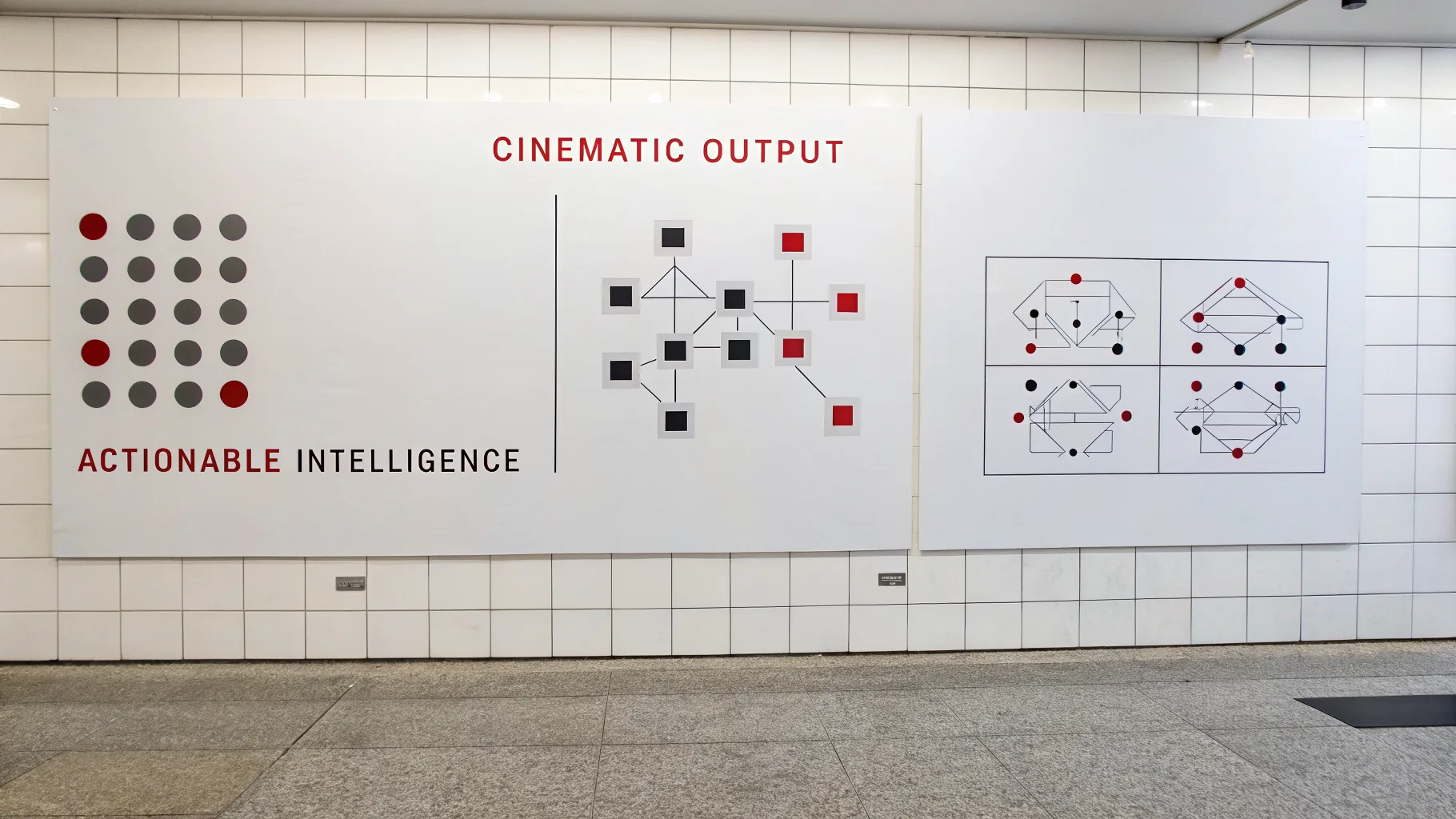
When evaluating a world model, visual quality is a weak first signal. The stronger test is whether the system can represent environment structure, predict state transitions, and support action selection as conditions evolve. That triad defines actionable intelligence: helping teams choose interventions that hold up in practice. A cinematic demo can still hide brittle reasoning about geometry, constraints, and causality.

The strategic distinction is straightforward. Language models optimize narrative coherence across tokens, while world models optimize causal executability across environments. In enterprise settings, this is not an either-or choice. The practical architecture pairs language models as conversational interfaces with world models as reality checks, then measures how tightly they stay aligned when assumptions break. That coupling is where real leverage appears.

A short way to remember it: fluent explanation is useful, but reliable consequence simulation is decisive.

01Evaluation Framework

Three-layer world-model assessment

A practical sequence for separating core capability from surface presentation and business impact.

Paradigm Layer
Expression Layer
Purpose Layer
Funding Decision
Connections
  • Paradigm Layer → Expression Layer: capability made visible
  • Expression Layer → Purpose Layer: measured in tasks
  • Purpose Layer → Funding Decision: evidence threshold

The layered model avoids category confusion. At the paradigm layer, the question is whether latent state, dynamics learning, and internal simulation are genuinely learned or merely memorized correlations. At the expression layer, teams inspect how capability appears externally—often through video generation or structured 3D outputs. At the purpose layer, leaders ask the hardest question: does any of this improve downstream task completion at scale?

This structure blocks a frequent executive mistake: treating demo quality as proof of decision quality. Impressive sequences can still fail once intervention points become ambiguous or constraints shift. If geometry and boundary conditions are not inspectable, deployment risk rises. That is why structural transparency should be handled as an operating variable, not a research luxury.

The destination is reliable action in open environments.

  1. Step 1

    Step 1: Capability claim

    A team asserts world-model competence. Initial review focuses on whether representation, prediction, and control are all present, not just output quality.

  2. Step 2

    Step 2: Counterfactual stress

    The model is tested under shifted constraints and non-ideal prompts to evaluate counterfactual simulation quality.

  3. Step 3

    Step 3: Transfer check

    Policy transfer stability is assessed: do decision policies remain effective when moving across scenarios and edge conditions?

  4. Step 4

    Step 4: Governance mapping

    Scenario testing, behavior boundaries, and rollback criteria are defined before deployment architecture is finalized.

  5. Step 5

    Step 5: Production integration

    Auditable traces connect model decisions to operational systems, including identity-verification registries and internal policy controls.

Execution rule before funding

Require evidence on two axes: counterfactual simulation quality and policy transfer stability. Ask teams to demonstrate performance when constraints change, not only when prompts remain ideal. Then lock governance into the architecture early—define scenario tests, boundary conditions, and rollback triggers before launch plans are approved.

02NOR-TIC's read

Language-model dominant strategy

Prioritizes fluent responses, broad coverage, and fast interface deployment. Excels at explanation, summarization, and conversational productivity, but may overestimate decision reliability when physical or operational constraints matter. Risk tends to appear later in execution loops.

Coupled language + world-model strategy

Uses language systems for interaction while anchoring decisions in simulation of environment dynamics. Emphasizes anticipatory behavior, robustness under changing conditions, and explicit governance controls. Better suited for robotics, autonomy, and high-consequence workflows where planning failure is expensive.

The central question is no longer whether models can answer, but whether they can anticipate, decide, and act reliably in changing environments.

Three forces are accelerating world-model momentum: diminishing returns from pure scale-up, strong demand from real-world task execution, and more mature multimodal infrastructure. Together, they reframe competition from “who speaks best” to who can predict and execute best under uncertainty. This is why robotics and autonomous driving remain recurring reference points: they expose planning errors quickly and at high cost.

Risk analysis must also expand. Beyond factual hallucination lies structural hallucination—a plausible yet incorrect internal model of force, collision, reachability, or causal pathways. Once these errors connect to execution systems, they propagate across workflows instead of staying isolated in text outputs. Governance baselines should therefore include simulation validation standards, behavior boundaries, and auditable decision traces from day one.

The pragmatic conclusion is not that world models are complete. It is that they already mark a capability watershed, and teams that combine language interfaces with robust simulation will move from generating information to shaping outcomes.
Back to top ↑